
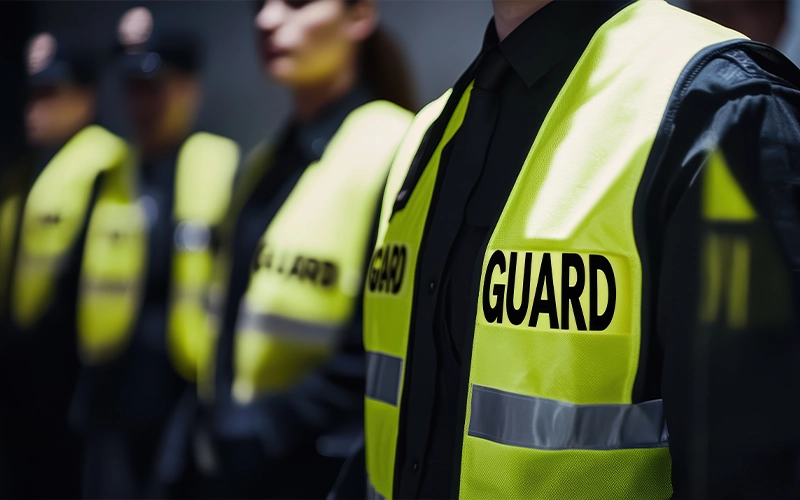
Safety concerns often push communities to get added protection, and HOA security guards are one option boards frequently consider. Some associations want a visible presence to deter crime, while others need help managing access and enforcing rules. It is important to understand when security guards make sense and the considerations that come with the decision.
Are HOA Security Guards a Good Idea?

Homeowners associations are known for the benefits they offer, from recreational facilities to convenient services. Some people even look for HOA communities specifically because of the perceived higher security. Gated communities, in particular, are seen as safer thanks to private entrances and security personnel.
Here are the advantages of hiring HOA security guards:
- Increased Safety. Guards can deter crimes, such as vandalism, theft, and unauthorized access.
- Higher Property Values. Improved safety and security can often lead to better marketability and home values.
- Peace of Mind. Residents feel safer and more comfortable in their community when guards are around.
Security guards may be a fixture among business establishments, but they don’t always come with the HOA package. In fact, many associations don’t rely on security guards at all. Still, if the suggestion comes up, board members must consider the move carefully.
Is HOA Responsible for Security?
Generally, associations are responsible for maintaining security in common areas. This includes ensuring proper lighting, controlling access, and posting signs. While these measures don’t guarantee safety, HOAs and condos may be held liable if they fail to address known safety issues.
That said, the HOA security responsibility stops there. Homeowners are responsible for the security of their individual properties. Residents should lock their doors and install personal alarm systems. In Texas, HOAs can’t prohibit homeowners from implementing their own security measures, such as installing cameras, so long as they don’t interfere with others’ reasonable expectations of privacy.
Even though an HOA is somewhat responsible for security, it is important to be careful about language. Boards should never promise security to residents, as a simple oversight can lead to legal problems. The HOA is not responsible for residents’ personal safety. So, blurring the lines can cause people to point fingers and lay blame.
Key Considerations When Hiring HOA Private Security
Board members must exercise good judgment and perform due diligence before making any decision, including matters of security. Beyond that, boards should also confirm that their decisions align with the state laws and the association’s governing documents.
Here are some things to consider before hiring HOA security guards.
1. Background and Training
Associations should consider the qualifications of the security personnel they plan to hire. Verify that security guards have completed the required training, background checks, and drug testing. They should also understand the community’s layout, rules, and emergency protocols.
Oftentimes, it is better to hire guards through a security agency or private firm. This eliminates the burden of searching for individual candidates and instead relies on a company to source guards for the association. The security company will also take responsibility for training and payroll.
2. Insurance
Boards must ensure that the security firm they contract with carries the proper licenses and insurance coverage. This will reduce the risk exposure for the association. If the HOA employs independent security personnel, it must also have comprehensive coverage.
At a minimum, boards should confirm the firm carries general liability, workers’ compensation, and professional liability coverage. It is also wise to request proof of insurance annually and ensure the HOA is listed as an additional insured.
3. Armed vs Unarmed
Board members must determine whether the community’s risk level warrants armed guards. Of course, armed personnel require stricter training and higher insurance costs. They also pose greater liability should things go sideways. On the other hand, many communities find that unarmed guards provide sufficient deterrence through visibility and patrols.
4. Funding
Homeowners pay for HOA security guards through their dues and assessments. The cost of security is included in an association’s operating expenses. Prices can vary based on the level of service, hourly wages, and location.
Before committing, boards should evaluate whether the current budget can support long-term security costs. In some cases, a special assessment or dues increase may be required.
5. Roles and Responsibilities
The HOA board should clearly define the security guards’ scope of work. This includes perimeter patrols, gate access control (such as checking visitors), enforcing parking rules, and managing nuisance problems.
Guards must be aware of the limitations of their authority. Clear boundaries help avoid misunderstandings with residents. Security guards are not law enforcement officers and should not exceed their assigned duties.
6. Documentation and Reporting
As part of the community’s protocol, HOA security guards must document and report every incident. It is best to require daily activity logs to ensure accountability. These logs and records can also serve as evidence in case of legal issues or security breaches.
What do HOA Security Guards Do?
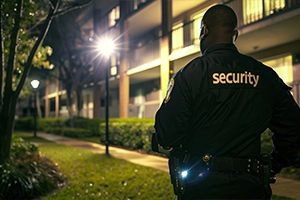
Board members must define the duties of security guards to avoid confusion and overstepping. While these duties can vary, they typically include the following:
- Access Control. Guards are responsible for managing entry and exit points in the community. Guests must present identification or record their visit. Residents are given gate passes to facilitate entry.
- HOA Security Patrol. Security personnel must conduct regular patrols, either on foot or using a vehicle. This increases visibility, as guards can’t always keep an eye on everything at once. Patrols also help deter criminal activity.
- Incident Response. In an emergency, such as a fire or other disturbance, HOA security guards can respond. Guards must receive proper training to know how to address incidents and when to call local law enforcement.
- Rule Enforcement. In some communities, guards are authorized to enforce the rules. Typically, they enforce parking regulations and amenity use, as they have oversight of these areas.
- Surveillance Monitoring. If the association maintains surveillance cameras, security guards may be tasked with monitoring them. This allows for quick identification of security breaches or suspicious activity.
Not a Light Decision
Hiring HOA security guards is not always a good decision. Ultimately, it will depend on the community’s needs, authority, and funding. Board members must take everything into account to ensure the association benefits from the move and avoids liability.
Graham Management offers exceptional HOA management services to Houston communities. Call us today at (713) 334-8000, request a proposal, or contact us online to learn more!
RELATED ARTICLES:
- HOA And Police: Jurisdiction, Boundaries, And Cooperation
- What Does Texas Law Say About HOA Security Cameras
- Can Unit Owners Rent Out Condo Parking Space?