
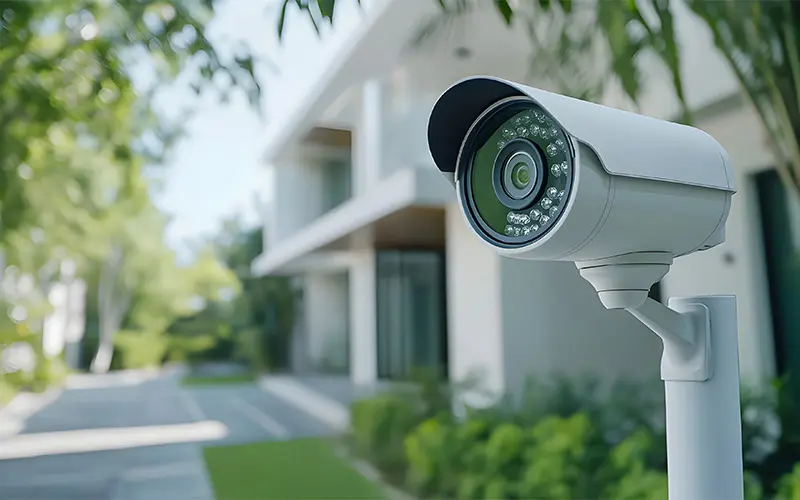
HOA security cameras are a common topic in communities across Texas. Homeowners want safety, while boards wish to maintain property values and ensure compliance. Understanding Texas law regarding these cameras is crucial for both homeowners and associations.
Can the Board Ban HOA Security Cameras?
 When it comes to homeowners association security cameras, the answer depends on both state laws and governing documents. Texas law offers certain protections for homeowners, but HOAs still have the authority to create rules. Additionally, some states lack laws addressing security cameras altogether.
It is important to strike a balance between homeowner rights and the association’s goal to preserve community appearance and privacy. Far too many HOA boards struggle to find the right balance. The same goes for condo associations.
Security cameras might be regulated for several reasons. First, boards want to maintain a uniform look across the community. Cameras mounted in visible or unusual places may be seen as disruptive to the overall aesthetic.
Second, privacy is an issue. Neighbors may feel uncomfortable if cameras appear to capture activity beyond the homeowner’s property. Finally, HOAs have to consider liability. Poorly managed footage or unapproved placement could lead to disputes or even lawsuits.
Security Camera Laws in Texas
Texas law sets clear guidelines on HOA security cameras. One of the most important rules is found in Texas Property Code Section 202.023. This law states that HOAs can’t prohibit a homeowner from installing security measures on their property. This includes security cameras. That said, the law does allow the association to enforce reasonable restrictions related to appearance, placement, or style.
This leads to a common question: Can an HOA ban security cameras in Texas?
The answer is no. An HOA can’t outright ban a homeowner from installing security cameras. They can regulate how those cameras look, where they are placed, and how they might affect others. This helps ensure that homeowners keep the right to protect their property while the association maintains community standards.
What to Include in an HOA Security Camera Policy
Texas security camera laws grant HOAs some authority to regulate specific details. To do this fairly, many associations must adopt a written policy. This policy should address aesthetic requirements, placement, footage management, and proper notice. Of course, both homeowners and the HOA itself must follow this policy.
Let’s break these down below.
Appearance
The appearance of security cameras in HOAs is often the first concern. Due to the impact of aesthetics on property values, associations strive to maintain a certain standard when it comes to camera styles. Cameras that stand out too much or seem out of place can change the character of the neighborhood.
Many associations require cameras to blend with the exterior of the home. Boards might insist on neutral colors or specific designs to avoid creating an eyesore. The goal is to protect the overall look of the community.
Placement
Placement is another critical factor. Associations can establish rules to ensure cameras do not point into a neighbor’s yard or windows, thereby protecting their privacy.
Many policies allow cameras at entryways, driveways, and other obvious points of access. Restrictions usually focus on preventing cameras from invading private spaces. For homeowners, that means avoiding neighbors’ windows and yards. For associations, that means avoiding bathrooms, changing rooms, and other private areas.
Footage Monitoring, Storage, and Access
 HOA surveillance rules should also address footage management. Associations may have policies about how footage is stored or shared. For example, only select people may have access to footage from HOA cameras unless law enforcement requests access.
Furthermore, footage takes up space. Over time, the association may run out of storage, leading to additional charges. To avoid incurring extra costs, the association’s policy should address how long footage must be kept before they are deleted.
Proper Notice
Many boards also require proper notice when HOA security cameras are installed. Owners may need to submit an architectural request before adding cameras. This helps the board verify that placement, style, and visibility align with community guidelines.
Similarly, the HOA should notify homeowners of the association’s security camera policy. If the HOA plans to install cameras in certain areas, it is equally brilliant to give notice to residents of their placements.
Considerations for Surveillance Cameras in Your Association
 The decision to use HOA surveillance cameras comes with several considerations. For association boards, it is essential to weigh privacy, cost, and visibility before making a choice.
Privacy
Privacy is often the biggest concern. Homeowners want to feel secure, but they may also be wary of the impact of cameras on their privacy. Associations should balance security with respect for personal boundaries.
Cost
Cost is another factor. For associations, installing community-wide HOA security cameras can be a large investment. Boards must weigh the benefits against the budget and decide if the cost is worth it.
If cost is a problem, the HOA board can install cameras in phases. Start with one area before moving on to the next once the budget frees up. Another option is to install dummy cameras, which can help deter crime but offer no actual recordings. If the association decides to use dummies, it is crucial to inform homeowners so they can set their expectations accordingly.
Signage
Signage is also important. Visible signs can warn people that an area is under surveillance. This can discourage unwanted behavior while also adding transparency. Many communities adopt clear signage rules to make sure residents and guests know when cameras are in use.
Can an HOA Force Me to Remove Security Cameras?
HOA security cameras have protections under Texas law, but homeowners must still follow community rules. If a camera violates the HOA’s written policy, the board can begin the violation process. This process usually starts with a written notice. The homeowner then has an opportunity to be heard before the board imposes any penalties.
An HOA can’t force removal if the policy conflicts with state law. For example, a rule banning all cameras would not hold up under Texas Property Code Section 202.023. But if the rule requires cameras to be placed in specific locations or to match the home’s appearance, enforcement is possible.
Penalties for noncompliance can include fines, suspension of privileges, and even legal action. Associations must make sure their governing documents clearly reflect their security camera policies so homeowners know what to expect.
The Final Word
When it comes to HOA security cameras, both boards and homeowners must understand the laws and rules that apply. In doing so, board members can avoid liability, while homeowners can protect their rights.
Graham Management offers exceptional HOA management services to Houston communities. Call us today at (713) 334-8000, request a proposal, or contact us online to learn more.
RELATED ARTICLES:
- HOA Common Area Rules: What You Can And Cannot Do
- Are Condo Pets Allowed? Can The HOA Ban Them?
- Strategies To Reduce Speeding In HOA Communities