
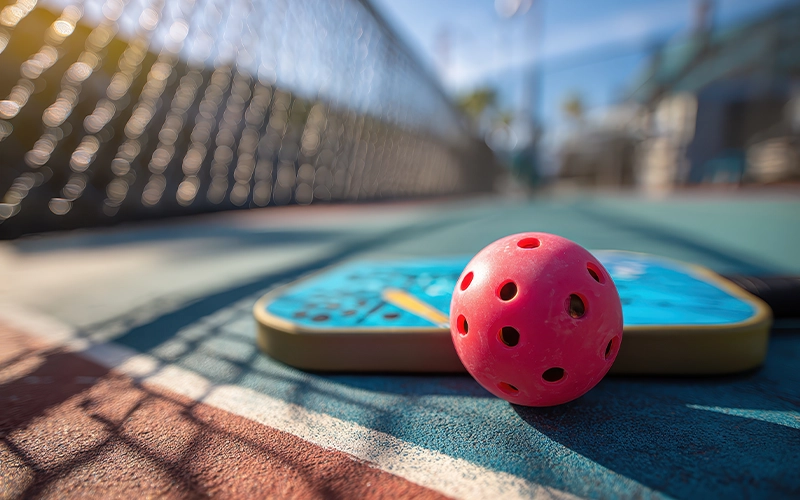
It is not uncommon for a homeowners association to receive a pickleball noise complaint. Given the sport’s popularity, more and more residents are likely to take it up. Unlike tennis or badminton, pickleball generates significant noise, particularly when the paddle hits the ball. Board members must learn how to navigate such complaints while keeping residents happy.
The Rise of the Pickleball Noise Complaint
Pickleball is becoming increasingly popular in the United States. In fact, almost 37 million people actively participate in the sport across more than 10,000 courts. With its simple mechanics and lightweight paddles, pickleball is relatively easy to get into. There’s a low barrier to entry, as the sport is both affordable and suitable for people of any age.
Homeowners associations, in particular, are seeing a rapid rise in requests to convert existing tennis courts or install new ones. Still, pickleball has its own pitfalls. The sport generates a lot of noise, with every paddle hit producing a high-pitched pop that many find irritating. In addition to a pickleball noise complaint, HOAs may also face disputes and lawsuits.
Key Considerations for Pickleball in HOAs
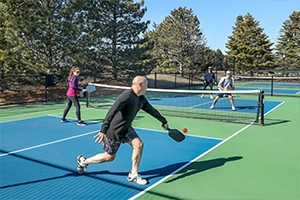
Adding a pickleball court to an HOA community may sound like a good investment. After all, given its meteoric rise in popularity, pickleball can attract new buyers and satisfy current residents. But installing a court shouldn’t be a decision taken lightly. Board members must consider all angles before committing to the game.
1. Noise Management
Pickleball is a rather noisy sport, with the sound of the plastic ball on a paddle triggering many complaints. Additionally, as with any game, players can also get riled up and start shouting.
To mitigate pickleball noise complaints, associations should consider building the court in a more secluded area. Situating the court far enough away from homes will limit the noise transfer. Sound-reducing barriers also work well.
Boards should also enforce strict rules. Examples include limiting play hours and prohibiting shouting. These rules can help control the noise and maintain a quiet neighborhood.
2. Legal Liability
Associations must also take liability risks into account. Improperly installed courts and increased foot traffic can lead to personal injury lawsuits.
To prevent pickleball injury claims in HOA communities, boards should ensure courts are installed in compliance with all safety standards. Accessibility is also a key consideration. Proper lighting, fencing, and ventilation are necessary.
Furthermore, boards should review their liability insurance. Make sure the policy is robust enough to cover possible injuries from pickleball.
3. Conversion vs. Installation
There are two ways to have an HOA pickleball court: install a new one or convert an existing tennis court. The first option may be more expensive, but it offers greater flexibility. The challenge is to find the right space for the court and the right contractor.
The second option is less expensive, as a court already exists. Still, the HOA may face pushback from tennis players who wish to keep the court as is. A good middle ground is to serve both sports on a single court.
4. Rules and Regulations
Rules of use are essential to maintain order. An association should have rules to manage demand, including a key-lock entry and pre-booked court times. It is also best to require players to wear non-marking shoes to maintain the integrity of the court.
As previously mentioned, rules are also necessary to keep pickleball noise complaints to a minimum. Play hours should never go on too late, and players should avoid shouting.
5. Due Diligence
Board members might think that installing a pickleball court will improve engagement and satisfaction, but they would have no way of knowing that if due diligence isn’t conducted. Before investing in a court, associations should check if there is interest in one in the first place. If residents prefer tennis over pickleball, the decision is moot.
Additionally, boards should refer to their governing documents to ensure compliance. The CC&Rs and bylaws may contain provisions governing the use of recreational amenities. This may include restrictions on modifications to existing facilities or on the installation of new ones. Many require membership approval before major changes, such as a pickleball court.
How to Handle a Pickleball Noise Complaint
Noise is a key problem for communities that offer pickleball courts. Boards should know how to manage these complaints when they arise.
1. Investigate the Complaint
Upon receiving a complaint, the board must first investigate to confirm validity. Sometimes, a disgruntled resident seeking payback might file a false complaint against their neighbor. Checking whether the complaint has merit will help the board avoid complications.
2. Confirm Violation
After verifying the complaint’s validity, the board should determine whether it warrants further action. Did someone violate the rules of the association? Or was the complaint simply a case of inconvenience or irritation?
3. Send Notice
If a violation has occurred, the board should send a written notice to the offender. This notice should include all pertinent details of the alleged violation, including how the owner may cure it.
4. Organize a Hearing
In Texas, Section 209.006 requires associations to give owners an opportunity to be heard before imposing a penalty. This hearing gives owners a chance to present their case and potentially avoid the consequences.
5. Impose a Penalty
Depending on the governing documents, an HOA may charge a fine, suspend privileges, or take legal action to enforce the violation. Not all associations have the inherent authority to impose these penalties, so it is essential to check the CC&Rs and bylaws.
6. Follow Up
Board members must ensure the penalty has been properly carried out. This means collecting the fine or following through with the suspension. If the violation requires a cure, the HOA board must check on that, too.
7. Document Everything
Documentation is crucial for a fair and consistent enforcement process. Every decision, notice, and correspondence must be properly recorded. This protects both the association and its board members in the event of a lawsuit.
Additionally, boards can refer to these records should any confusion arise. Future board members can also use past decisions as a guide for their own decisions.
The Right Balance
Pickleball can be a fun way to stay active, but not all communities may find it appealing. A pickleball noise complaint is never far off, especially if the court is located close to homes. Still, it is possible to feature a court while still ensuring peaceful enjoyment by enforcing rules and managing risk.
Graham Management offers exceptional HOA management services to Houston communities. Call us today at (713) 334-8000, request a proposal, or contact us online to learn more!
RELATED ARTICLES:
- Is Having A Sport Court In Backyards Allowed In HOAs?
- HOA Common Area Rules: What You Can And Cannot Do
- Dealing With HOA Noise And Nuisances In Texas