

Homeowners who want to show their patriotism should be wary of HOA flag rules. While flying a flag in and of itself isn’t typically prohibited, many associations enforce rules about size, placement, and display, among other things. Violating these flag rules can result in penalties.
Are HOA Flag Rules Legal?
Homeowners associations and condominiums are known for enforcing strict rules about what residents can and can’t do. Architectural standards, for instance, limit what type of improvements or modifications an owner can make to their home’s exterior. Many communities also impose caps on rentals, especially short-term ones.
These rules help maintain community standards and preserve property values. While they may seem too restrictive at first, most rules are designed to protect owners’ investments in the association.
When it comes to flags, it is not uncommon for associations to apply regulations. Flag rules are generally legal and enforceable, provided they don’t conflict with federal and state laws or the governing documents.
Can an HOA Stop You From Flying a Flag?

Prohibiting a resident from flying the U.S. flag is unlawful both at the federal and state level. The Freedom to Display the American Flag Act of 2005 protects the right to fly the American flag.
This federal law prevents HOAs, condominiums, and other residential associations from banning residents from displaying the U.S. flag on properties they own or have exclusive access.
At the state level, displaying the American flag is also a right that owners have. Section 202.012 of the Texas Property Code states that an association can’t prohibit an owner from flying the flag of the United States of America. Similarly, associations can’t prohibit an owner from flying the flag of the State of Texas or a flag of any armed forces branch of the U.S. (official or replica).
If an association tells an owner that they are unable to fly any of the flags listed above, the rule is void and unenforceable. An association may even find itself in legal trouble for enforcing such a rule.
That said, reasonable Texas flag rules are permitted.
What’s an Acceptable HOA Flag Policy?
While an association can’t ban flag displays outright, it can adopt reasonable rules about how owners must display them. Section 202.012 of the Texas Property Code is clear on that.
Here are the most common HOA flag rules.
1. Follow American Flag Rules for Display
The federal U.S. Flag Code stipulates the rules for flying the American flag at home. An association may require its residents to follow this Code when displaying the U.S. flag. Moreover, an association may also require residents to adhere to Texas law when displaying the Texas flag.
2. HOA Flagpole Rules
An association may require its residents to use a flagpole made from durable, permanent materials. It may also require that flagpoles have a finish that matches or complements the home to maintain community aesthetics.
Additionally, flagpoles must comply with local zoning laws, easements, and setback requirements. Most associations also mandate that residents keep their flagpoles in good condition, repairing or replacing them when necessary. If the flagpole becomes unsafe, the resident may need to remove it.
3. Size, Number, and Location of Flagpoles
An association may regulate how many flagpoles a property may have, how large they can go, and where they may be located. The goal is to ensure that the HOA flag display aligns with community standards.
That said, owners generally have the freedom to choose between installing a freestanding flagpole (up to 20 feet tall) in their front yard or attaching a flagpole to their home (not owned by the HOA). Provided the owner follows the rules, an HOA board can’t force the owner to use one option instead of the other.
4. Flag Size
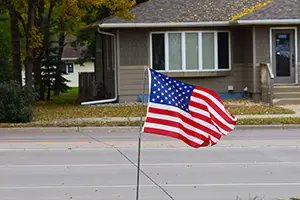
Another common HOA flag rule concerns its size. The association may adopt reasonable rules concerning the size of the flag, such as imposing a limit. Flags that are too big may cover the line of sight or turn into eyesores.
5. Lighting
Lighting is another HOA rule regarding flags. If an owner illuminates a flag at night, the board may regulate the size, location, and brightness of the lights.
The purpose of the lights is to give the flag its due respect. Some owners may abuse this by utilizing strobe lights, colored lights, or lights that are too bright, which can all disrupt the peace in the community.
6. Noise
Noise is a prevalent concern in many communities, including HOAs and condominiums. Most associations regulate noise by imposing a decibel limit or enforcing quiet hours. The same can apply to HOA flag rules.
The HOA may adopt reasonable rules to reduce noise caused by a flagpole’s external halyard. This is the rope used to raise and lower the flag. The rope can bang against the pole and disturb neighbors. An association may require an owner to implement measures that will prevent or limit the noise.
7. Common Areas
Generally, owners only have the right to display flags on their own properties or units. They are confined to these areas, as they own them.
Texas law allows associations to prohibit owners from placing flags or flagpoles on HOA-owned property or common areas that all owners share. Owners don’t have exclusive rights to these spaces, and state protections only apply to the owner’s property.
A Two-Way Street
While they may seem restrictive, HOA flag rules help preserve the overall aesthetics and character of the community. Federal and state laws protect owners’ right to display certain flags, but that right is not without limits. On the HOA’s part, board members must always work within their authority and enforce the rules consistently to avoid liability.
Graham Management offers exceptional HOA management services to Houston communities. Call us today at (713) 334-8000, request a proposal, or contact us online to learn more!
RELATED ARTICLES:
- Texas HOA Payment Plans: What Boards Must Offer And How They Work
- HOA Meeting Minutes In Texas: What Boards Should Record And What Owners Can See
- Pickleball in HOAs: Noise Complaints, Court Rules, And Injury Liability