
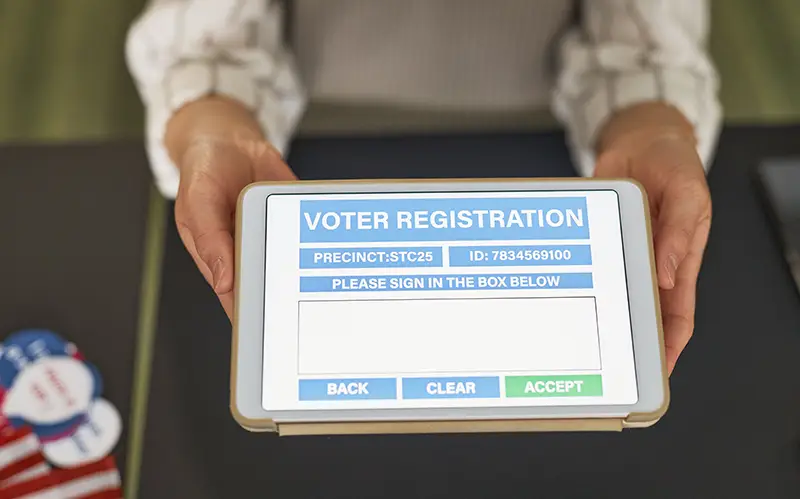
Utilizing HOA electronic voting can be a great way to attract more voters and more easily establish a quorum. In Texas, HOAs and condominiums must adhere to certain requirements when administering electronic voting. The governing documents also play a role, often stipulating the procedural steps that associations must follow.
Is HOA Electronic Voting Allowed in Texas?
Electronic voting, also known as HOA eVoting, is a practice wherein members cast their votes using electronic means. This can be employed during board elections or any other decision where a membership vote is necessary.
In Texas, Section 209.00592 allows an owner to vote in person or by proxy, using absentee ballots, through a representative, or using electronic ballots. That said, an association need not provide owners with more than a single method of voting, unless the governing documents say otherwise. This means that electronic ballots are not required, but they are permitted.
Texas law also recognizes electronic votes as written and signed ballots. For contested elections, written and signed ballots are mandatory.
What Counts as an Electronic Ballot?

An electronic ballot can mean many things. In Texas, Section 209.00592 specifically describes an electronic ballot as any vote cast by email, facsimile (fax), or through a posting on a website. This includes online voting platforms.
Moreover, associations must be able to confirm the identity of the owner who is submitting the ballot. The voting system must also be able to provide a receipt or acknowledgment showing that the ballot was successfully transmitted and received by the HOA.
Rules on HOA Electronic Voting in Texas
Section 209.00592 further elaborates on the rules of an electronic ballot.
1. Electronic Ballots Count Toward a Quorum
According to Texas law, an electronic ballot can help the association meet quorum requirements, but only for the specific issues that appear on the ballot. For example, if a ballot asks owners to vote on the annual budget, those ballots only count toward the quorum for the budget vote. If a vote on a new project will also take place at the same meeting, that ballot can’t be included in the quorum count.
2. In-Person Votes Override Electronic Ballots
If an owner submits an electronic ballot but later attends the meeting and votes in person, the in-person vote is the one that counts. The association must ignore the earlier electronic ballot that the owner submitted, as it is essentially rendered void.
3. Proposal Changes Invalidate Electronic Ballots
If the HOA board amends a proposal during the meeting in a way that it becomes different from the one printed on the electronic ballot, those electronic votes can no longer be counted in the final vote. This rule protects owners from voting on something that they never even knew about and prevents boards from manipulating votes.
For example, if a ballot asks owners to approve a $500 special assessment, the ballots should count toward that specific issue. If the board amends the motion to a $750 special assessment during the meeting, the original electronic votes (for the $500 special assessment) don’t count toward the final vote on the new motion.
How to Protect the Integrity of HOA Online Voting
When done wrong, online voting can quickly turn chaotic and even deceptive. Here are some strategies for ensuring the reliability of HOA electronic voting.
1. Educate Homeowners
First, board members must educate voting members on the procedures for electronic ballots. This includes ensuring they have access to the voting platform and have instructions on what they must do to cast their votes.
Keeping owners in the dark, especially selectively, can be considered a form of vote manipulation. If the board prevents certain members from voting, even unintentionally, it increases legal exposure for the association.
2. Provide Proper Notice
Owners must receive notice of all annual or board meetings. If a vote is to take place, the notice must also include the relevant information. For electronic ballots on a website, boards must notify every owner that the ballot is available and explain how to access the website and obtain the ballot.
3. Verify Voter Eligibility
A chief concern surrounding HOA electronic voting is identity confirmation. Associations should have a way to verify that an electronic vote really came from an eligible voter. Fortunately, keeping updated email lists and using secure online platforms easily address this problem.
4. Keep Accurate Records
While Texas law does not require associations to retain ballots as part of their official records, it is still a smart decision to do so. Proper and accurate documentation can protect the association should legal challenges arise later on.
What are the Benefits of HOA Electronic Voting?

For associations still considering if electronic voting is right for them, it is essential to examine the potential advantages the method brings.
1. More Time- and Cost-Efficient
Electronic ballots can save the association both time and money. It is infinitely easier to prepare online ballots than physical ones. Plus, it costs significantly less, as there would be no need for printing or mailing.
2. Attracts More Voters (Quorum)
HOA electronic voting offers convenience and flexibility. When owners don’t have to physically fill out a ballot and send it in, they are more likely to participate in the vote. They simply have to log on and click a few buttons. This, of course, also makes it easier for an HOA to reach a quorum.
3. Lower Risk of Loss or Tampering
Paper ballots are more susceptible to loss, damage, or manipulation. With electronic ballots, association boards can access them all in one place. The board does not need to physically transport or handle the e-ballots, reducing the risk of loss and tampering.
4. Reduce Manual Mistakes
Physical ballots can be difficult to read when they’re marked up. In comparison, if an owner changes their mind in the middle of filling out an electronic ballot, they can simply tick a different box or delete what they’ve already typed.
Additionally, online voting platforms often come with built-in protective features. These platforms can prevent duplicate votes and close the session after the deadline. They also count the votes more accurately, especially compared to manual counting.
5. Improved Security
Online voting offers enhanced security through encryption and authentication methods. This ensures that votes remain confidential. It also allows the association to verify voter eligibility even from a distance.
6. Quick Access to Reference Materials
Many online voting platforms allow attachments for a quick review of related documents and materials. For instance, if the ballot asks owners to approve a special assessment, they can review the attached proposal again.
An HOA doesn’t even have to use a fancy e-voting platform for this. Email attachments work just as well. Such a practice helps ensure that voters are informed and educated before they make a decision.
7. Eliminates Proxy Errors
Proxy voting is often used to meet quorum requirements, especially for decisions or elections that require a high threshold. Yet, proxies come with their own set of pitfalls. Proxy holders may change the vote on the ballot or fail to attend the meeting at all.
With HOA electronic voting, proxies are no longer necessary. Voters can conveniently submit their ballots remotely, eliminating the need to attend the meeting physically.
A Good Option
Clearly, HOA electronic voting presents many advantages to community associations. As Texas law permits this method of voting, boards should consider utilizing it to its fullest. That said, there are certain measures that boards must take to ensure reliability and compliance.
Graham Management offers exceptional HOA management services to Houston communities. Call us today at (713) 334-8000, request a proposal, or contact us online to learn more!
RELATED ARTICLES:
- Texas HOA Website Requirements: Mandatory Inclusions To Have
- HOA Board Refuses Election: Reasons And Solutions
- What’s The Role Of An HOA Election Committee?